Honest comparison
Webrec vs Hotjar
Heatmaps, recordings, and surveys for marketing and product teams.
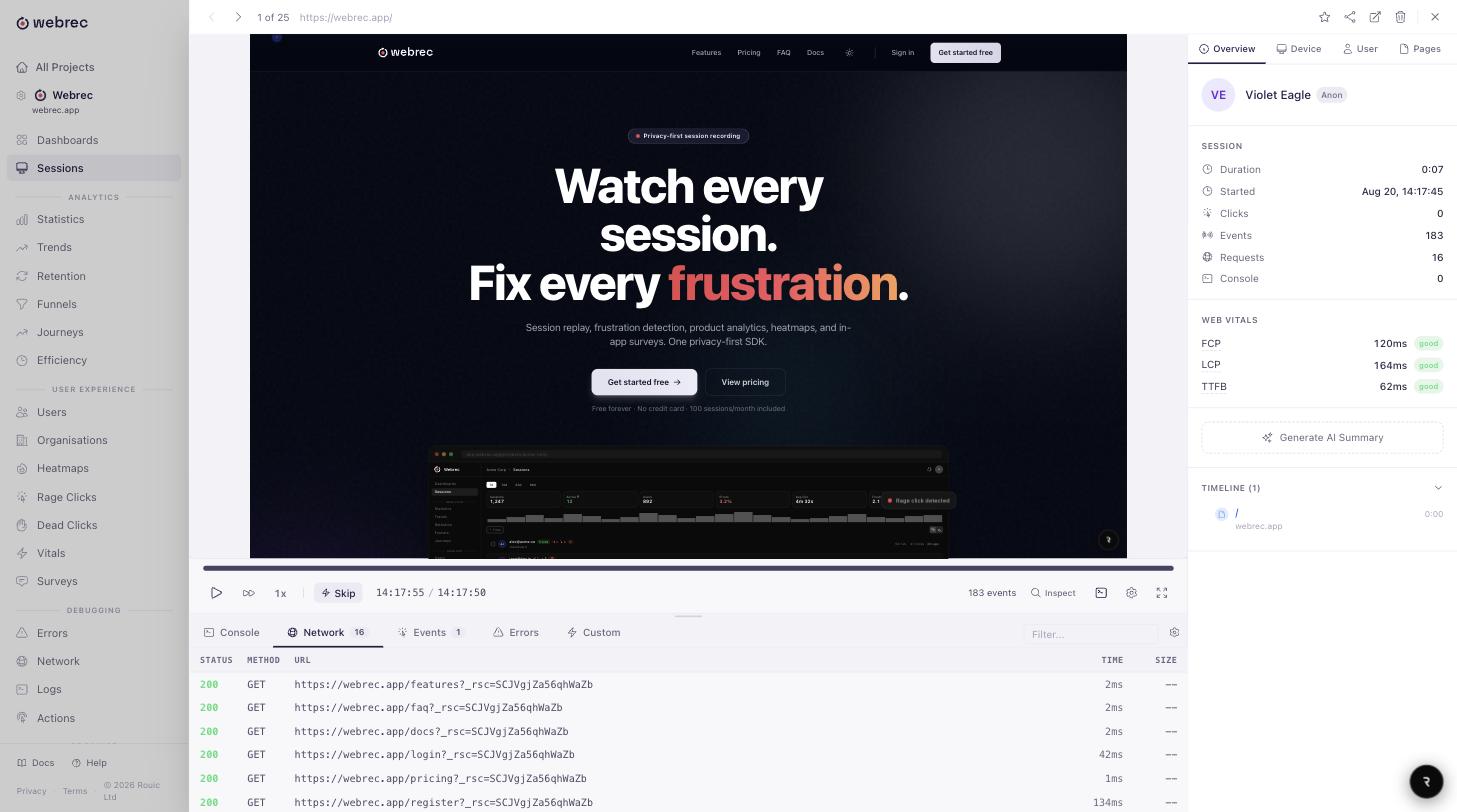
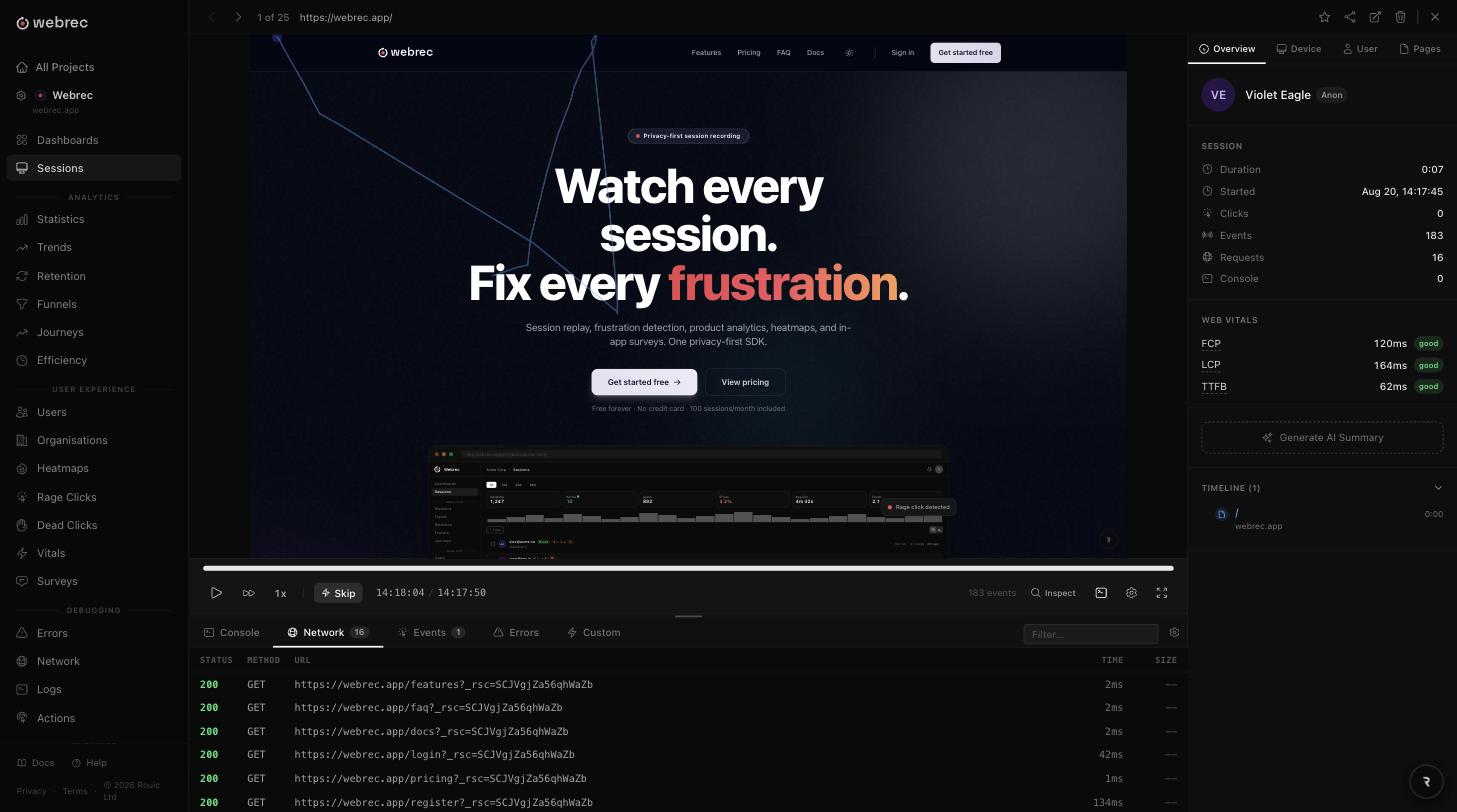
Hotjar made heatmaps and simple session recordings mainstream, and it remains a popular choice for marketing-led teams. Webrec covers the same ground (click and scroll heatmaps, session replay, in-app surveys) and adds the engineering depth Hotjar does not aim for: error tracking, a network and console inspector, product analytics, and frustration detection.
Where Webrec leads
- Error tracking with stack traces, plus console and network inspectors in every replay
- Product analytics: funnels, retention cohorts, user journeys, and custom dashboards
- Dead click, rage click, and frustration scoring built in
- Higher session limits on comparable plans
- Session data hosted on UK infrastructure
Where Hotjar may fit better
- Larger library of third-party integrations
- Focused, familiar tooling for marketing-led teams
At a glance
Feature availability reflects publicly documented capabilities as of August 2026 and may change. Corrections are welcome at [email protected].
Bottom line: Teams that only want heatmaps and surveys are well served by either product. As soon as developers join the workflow, Webrec offers substantially more: replays carry the console, network, and error context needed to actually fix what the heatmap surfaces.
Looking at other tools? See the full comparison of Webrec with FullStory, Hotjar, and LogRocket.
Try Webrec for yourself
The best way to compare is to try it. Start with 100 free sessions a month. No credit card, no sales call.